BY SACNILK
Mumbai, August 8 - The 2000 crore worldwide mark remains one of the most elusive milestones in Indian cinema. Aamir Khan's sports biopic Dangal is the only Indian film to have crossed this barrier, but there is an important caveat to that historic run: more than half of the film's worldwide gross came from China, with 1300+ crore gross. The Chinese market delivered an extraordinary response to Dangal, turning it into a once-in-a-generation box-office phenomenon, but China is not a regular theatrical market for Indian films. That makes the 2000 crore benchmark even more difficult to replicate.
(adsbygoogle = window.adsbygoogle || []).push({})
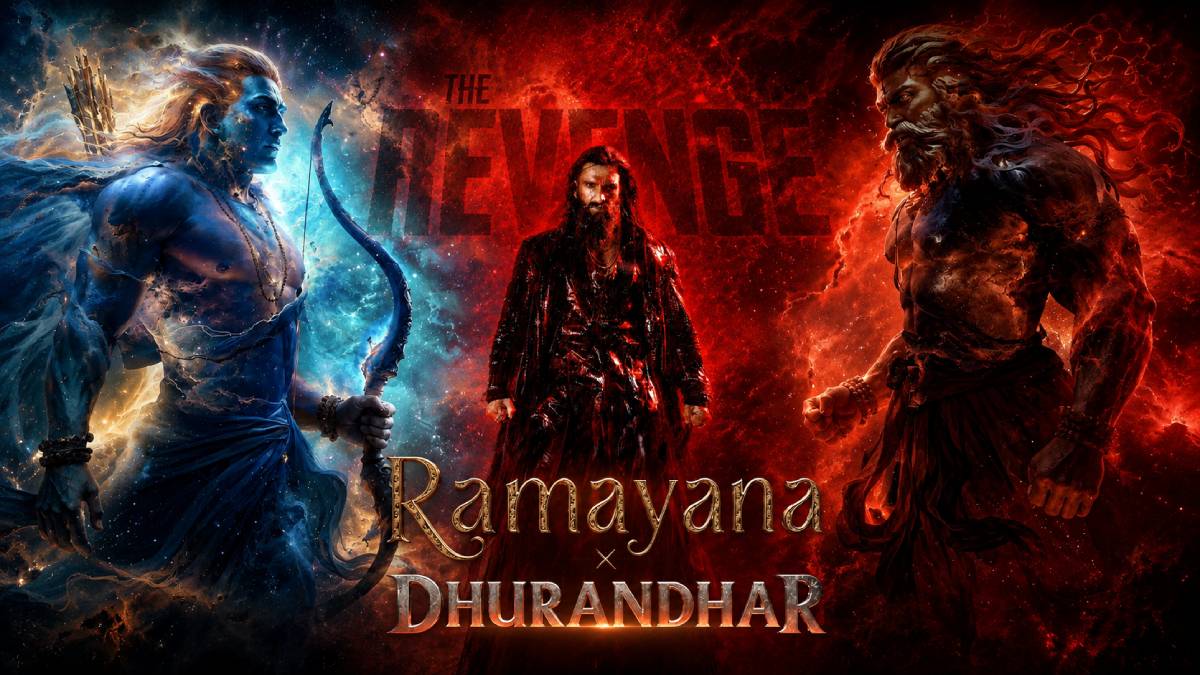
In recent years, however, Indian cinema has started getting closer to that number without depending on a China phenomenon. Director Aditya Dhar's Dhurandhar 2 came remarkably close, emerging as one of the biggest Indian blockbusters ever with a worldwide gross of more than 1800 crore. The Ranveer Singh-led action entertainer demonstrated that an Indian film can come within striking distance of Dangal through the conventional domestic and overseas markets. Yet, despite its extraordinary run, Dhurandhar 2 ultimately couldn't touch the 2000 crore milestone, leaving the record intact.
This is where Ramayana comes into play. The Ranbir Kapoor, Sai Pallavi and Yash starrer has several advantages that could make it a genuine contender for the 2000 crore club, but perhaps the biggest one is its international distribution strategy. The film is being released internationally by Sony Pictures, arguably one of the biggest and most powerful film distribution companies in the world. This could give Ramayana an unprecedented opportunity to reach audiences outside India.
(adsbygoogle = window.adsbygoogle || []).push({})
According to reports, Sony Pictures is planning to release Ramayana across more than 50,000 screens internationally. If that rollout materialises, it would easily be the widest international theatrical release ever for an Indian film by a considerable margin. The significance of this cannot be overstated. Indian films have traditionally relied heavily on diaspora audiences overseas, with relatively limited screen penetration compared with Hollywood event films. Ramayana could potentially change that model.
The scale of the international release could also help the film overcome one of the biggest challenges in its two thousand crore pursuit. Unlike Dangal, Ramayana cannot be expected to receive an enormous China boost. Instead, it will need to maximise revenue across established Indian-film markets as well as territories where Indian cinema is still expanding. A distribution giant like Sony Pictures gives the film the infrastructure, market access and theatrical reach to attempt exactly that.
(adsbygoogle = window.adsbygoogle || []).push({})
The domestic side is equally promising. Ranbir Kapoor gives Ramayana a strong Hindi-market foundation, while Yash brings enormous pan-India popularity. More importantly, the Ramayana itself is arguably one of the most recognisable stories to emerge from India, giving the film an advantage that very few original or franchise properties can match. Dhurandhar 2 proved that an Indian film can get within roughly 200 crore of Dangal's worldwide record without relying on a China phenomenon. Ramayana, meanwhile, could have an even bigger international theatrical footprint thanks to Sony Pictures and a reported 50,000-plus overseas screens.
Of course, a massive release does not automatically guarantee a massive box office. Ramayana will still need excellent audience reception, strong word of mouth and exceptional legs to turn its enormous release scale into actual revenue. But for the first time, the infrastructure appears to be in place for an Indian film to genuinely attempt this. Dangal set the 2,000 crore benchmark. Dhurandhar 2 came remarkably close but couldn't finish the job. Now, Ramayana has the opportunity to take the next big step. If the film lives up to its enormous pre-release expectations, the combination of the epic story, star power, scale and strong distribution power could make the barrier a very real target rather than just a distant box-office dream.


 Wrestling